


Retirement planning: five tips for volatile markets
Planning for retirement in volatile markets can be nerve-wracking, especially as the big day gets closer. No one likes to see their hard-earned savings drop in value. However, these ups and downs don’t have to mess up your plans. Consider these five tips to help you smooth out the bumps on your path to retirement.

1 Stay calm and focus on your future
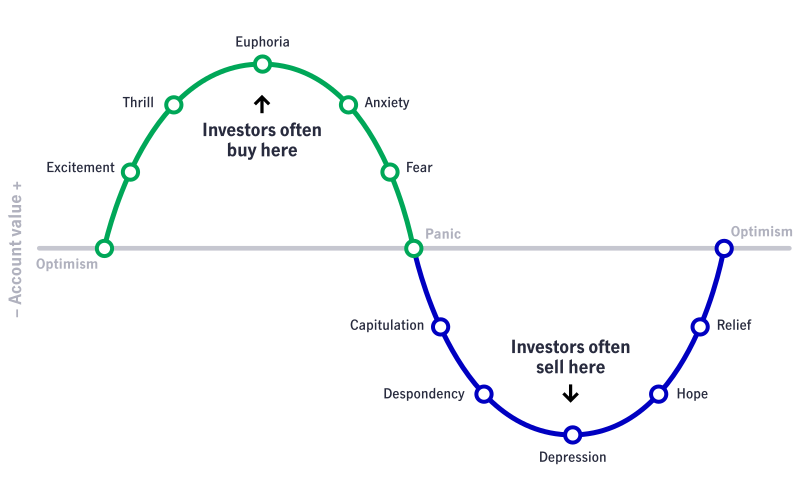
When the stock market is all over the place, you might be tempted to make quick decisions about your money. But it’s better to stay calm. If you act based on feelings, you may end up making choices you wish you hadn’t. For example, you might invest more when prices are high or sell when prices are low.
Emotional investing cycle
2 Consider diversifying your investments
The market moves up and down every day, but that doesn’t mean every investment moves the same way. Some investments can be up while others are down. That’s why it’s important to have a mix of investments. It can help protect you from significant losses when the market drops. You don’t have to be an investment expert to follow this tip. A financial professional can help you choose your mix based on your comfort level with risk, goals, and target retirement age.
3 Identify your sources of retirement income
You’ll likely have multiple sources of income in retirement, such as:
- The savings in your workplace retirement account
- IRAs, annuities, and other personal savings
- Social Security or other government benefits
- Pension plan
- Part-time work
Some of these sources, such as Social Security, pensions, and annuities, may provide a steady cash flow, while others might fluctuate with the markets. Understanding which is which can help you craft a plan to make your money last, despite market ups and downs. This brings us to our next tip.
4 Review your withdrawal strategy
If you’re already retired, it’s a good idea to check in on your withdrawal strategy—your plan for taking money out of your accounts to pay expenses. Reviewing your strategy can help you decide if any changes are necessary to stay on track. Some common strategies include:
- Taking a set amount out each year with small adjustments for inflation
- Dividing your retirement income into buckets that you use at different stages of your retirement
- Taking out only the dividends and interest from your investment accounts, potentially giving your principal more time to grow
Just like with tip 3, you don’t have to create or review your strategy on your own. A financial professional can be a great resource.
5 Think about the best time to retire
If possible, consider waiting a little longer to retire if the stock market isn’t doing well. Delaying your retirement can give your savings a chance to recover and help ease your financial stress. There are other benefits, too.
- You can continue to save in your retirement account and IRA, boosting your savings
- Your pension benefits may increase (if you have a pension plan)
- You may be able to wait until age 70 to take Social Security, maximizing your benefit
Manage market uncertainty with certainty
While you can’t control whether the markets go up or down, you can control how you react. So, when things get a bit bumpy—as they likely will—remember to take a deep breath and trust in the plans you’ve made to save for and enjoy your retirement.
FAQs
How can emotional investing affect retirement planning?
Emotional investing can lead to impulsive decisions, which can derail your retirement savings goals. So when the markets get bumpy, stay calm.
How does diversifying your investments help manage market volatility?
Diversifying your investments can help even out the highs and lows in the market because every investment reacts differently. They don’t all go up or down at the same time.
What’s the benefit of delaying retirement during volatile markets?
Delaying retirement can help give your savings time to recover when the market improves.
For complete information about a particular investment option, please read the fund prospectus. You should carefully consider the objectives, risks, charges, and expenses before investing. The prospectus contains this and other important information about the investment option and investment company. Please read the prospectus carefully before you invest or send money. Prospectus may only be available in English.
Important disclosures
Important disclosures
Neither asset allocation nor diversification guarantees a profit or protects against a loss.
There is no guarantee that any investment strategy will achieve its objectives.
It is your responsibility to select and monitor your investment options to meet your retirement objectives. You should review your investment strategy at least annually. You may also want to consult your own independent investment or tax advisor or legal counsel.
The content of this document is for general information only and is believed to be accurate and reliable as of the posting date, but may be subject to change. It is not intended to provide investment, tax, plan design, or legal advice (unless otherwise indicated). Please consult your own independent advisor as to any investment, tax, or legal statements made.
MGR1113254987355